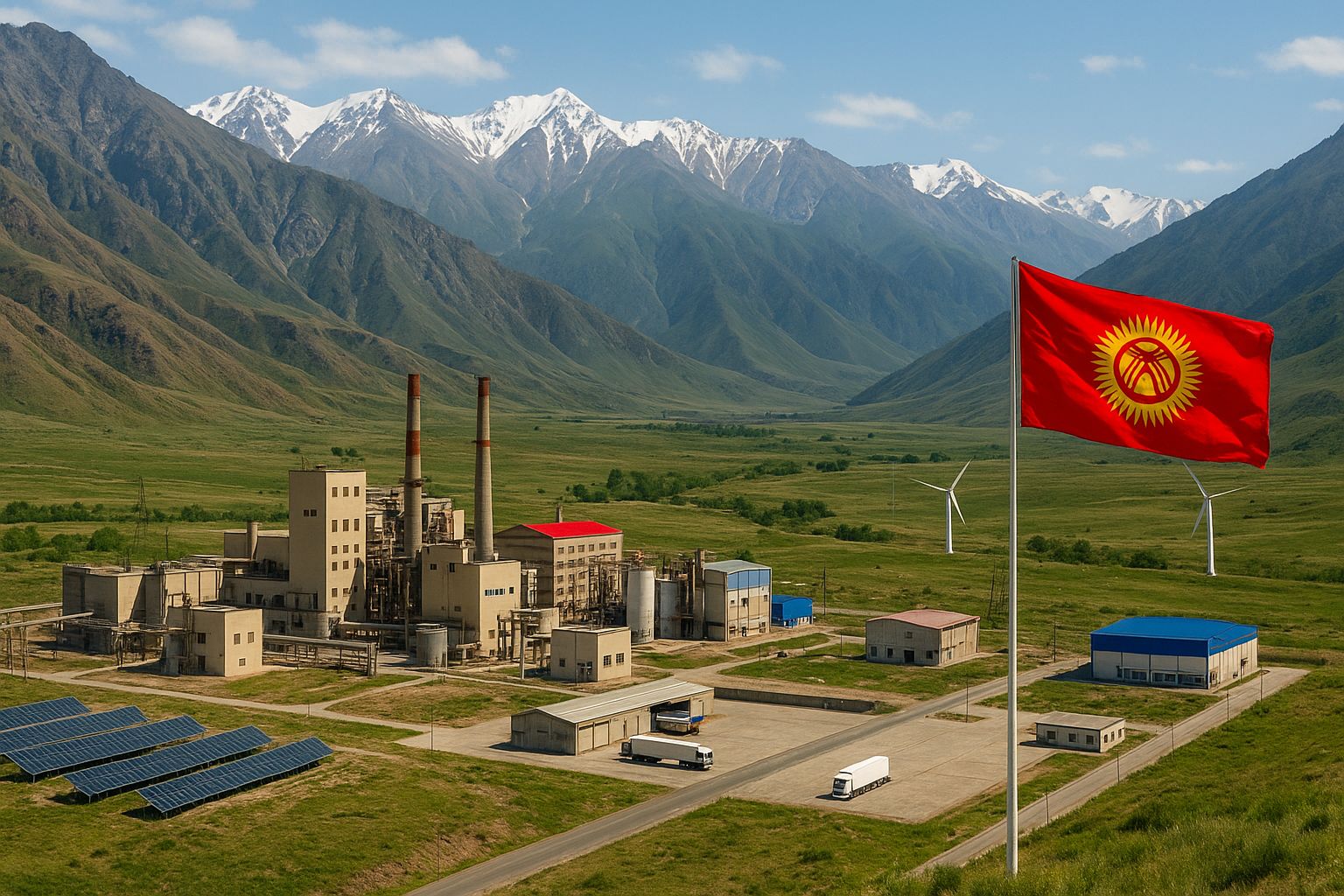
The “Industrial Development of Kyrgyzstan” project is a joint initiative of UNIDO’s Research and Industrial Policy Advice Division and the State Committee for Industry, Energy and Subsoil Use of the Kyrgyz Republic. It was launched to help a small, landlocked and highly open economy navigate complex global and regional dynamics and to place its industrial sector on a more resilient and sustainable path. In particular, the project was designed to provide an analytical and strategic foundation for a national Strategy for the Sustainable Development of the Industry of the Kyrgyz Republic for 2019–2023, linking industrial growth with improved governance, social development and environmental sustainability.
To this end, the project used a systems-analysis and foresight-based approach. The team combined an in-depth review of existing national strategies and policies with quantitative analysis of data from national and international sources, as well as interviews and broader engagement with stakeholders from government, business and civil society. A core stakeholder group was established, and four regional round tables were held in Bishkek, Osh, Karakol and Jalal-Abad in 2018 to validate evidence, capture regional perspectives, and test emerging ideas. Advanced foresight techniques and participatory scenario planning were then applied to develop plausible long-term development pathways for Kyrgyzstan’s industry, highlighting key uncertainties, trade-offs and opportunities to inform strategic decision-making.
On the basis of this analytical and participatory work, the project produced a suite of policy-oriented reports, including background diagnostics, scenario-based “plausible futures,” assessments of required infrastructure and priority sectors, analyses of trade opportunities and regional integration, investment and financing options, regional development aspects, and finally a set of integrated recommendations and responsible bodies. The central “Recommendations” report synthesizes these findings into 19 interconnected policy directions with detailed actions aimed at removing barriers, creating an enabling environment, improving access to finance, strengthening regional and global economic integration, upgrading infrastructure, enhancing human capital and innovation, and ensuring social and environmental sustainability of investments. Together, these outputs underpinned the government-endorsed industrial development strategy and provided an evidence-based roadmap for aligning Kyrgyzstan’s industrial policy with long-term sustainable development goals.
Industrial Development of Kyrgyzstan